BLOGGER TEMPLATES - TWITTER BACKGROUNDS

Wednesday, February 17, 2010

Pheromoans.. i mean mones.


A pheromone is a secreted substance that triggers a response, specifically a social response. In Greek the word is translated into 'transfer' and 'excite'.. transferring excitement? The word sounds an awful lot like the word hormone because hormones do the same thing but on a cellular level. A hormone is released into the blood stream or cytosol (goo outside the cell) so the other neighboring cells are aware of the environmental presence/threat. So basically one cell is like.. 'Yo, other cell.. shit is going downnnnn!' Then cells 2 passes it along like a game of telephone and the organism is then more able to cope with what is coming. So, a pheromone is an kind of like hormone but it is between two different organisms, like say two people.

So there are many kinds of pheromones, but let's talk about sex (baby.. let's talk about you and me). Humans secret an airborne chemical (found in all humans, insects and animals) and a signal is sent from one person to another of the opposite sex. If two members of the opposite sex are secreting pheromones at the same time.. oh, it's on. Many perfumes and colognes are designed to enhance this affect, but interestingly most pheromones are secreted through the skin as sweat and other bodily fluids (ew). These chemicals come into our nose and signals of sexual desire, attraction and control of impulse are sent to the brain. These are the basic instincts of sexual attraction. Of course, as humans, we have other things like body language and verbal cues, but this is the bare bones of what makes us want to get busy.
Sexual pheromones not only affect sexual desire, but people with higher secretions of pheromones seem to get more attention in general and give off better impressions. Research is ongoing, but here is some food for thought: As we get older, our sense of smell decreases.. could this cause the decrease in sex drive people talk about as we get into our old age?


Monday, February 15, 2010

Why Do You Sneeze When You Look into the Sun?

Nothing is worse then when you are on the brink of a sneeze, but you can't get it out! My solution has always been to look up into the sun to force a sneeze.. but why does that work?! This has been wondered about for centuries, but modern neurobiology might have the answer.

Aristotle was one of the first to try and answer this question. He surmised that it must be the heat of the sun responsible for the phenomena in "Book of Problems." About 2,000 years later, Francis Bacon tested this theory with the observation that when you look at the sun with your eyes closed.. the heat remains but there is no sneeze. This led him to conclude that the sun in your eyes made them water.. causing moisture to seep into your nasal cavity.

These theories were educated and rational for the understanding of science during those time periods, but as we learned more about neurobiology/ human physiology it was deemed that Bacon's theory was disregarded due to the speed of the sneeze following the sun exposure and a new theory was born. This new theory was deemed as a result of 'crossed wires' in the facial neural networks (cranial nerves).

The cranial nerves are a complicated part of the nervous system that comes out of the brain stem (connects spinal chord to the brain and contains the medulla oblongata, pons and midbrain). There are twelve cranial nerves and they control a variety of functions from blinking to hearing to smelling (etc). These nerve tracts run very close to each other and it is theorized that when the signal of excessive light enters your pupils the sudden increase in electrical current traveling from the optic nerve (signaling to constrict the eyes pupil) accidently triggers the trigeminal nerve confusing the brain into thinking there is a irritant in the nose- causing a sneeze.
This has come to be called the photic sneeze reflex, but does not seem to be linked with any further medical problems. It also seems that this doesn't happen to every person. Further research into a genetic element of this reaction has began due to it's potential to shed light into other neurological conditions. (Shining light into the eyes of someone with epilepsy can trigger a seisure, and it could be related to the cross wiring of the cranial nerves) So when you can't seem to sneeze, look into the sun and see if you are part of the population that undergoes the photic sneeze reflex.

Tuesday, January 12, 2010

FACTS ABOUT FARTS

Facts About Your Farts
Source: Online Education

Breaking the seal...


My roommate asked me a question over a tower (yes.. tower) of blue moon and she wondered why alcohol makes you pee and what does breaking the seal mean.. So.. let's do this.


We have a few variables here.. the affect of alcohol on the body, the signal to the brain telling you that you have to pee (or void is what science nerds would say) and the formation of urine from the kidneys. Which is to blame? The answer is they aren't sure.


One theory is that alcohol inhibits the release of an important antidiruetic (limits urine formation) vasopressin. The kidney's job is to filter toxins from the blood, excrete it through urine and to maintain the the body's water and solutes (ions like chloride, sodium and potassium- these ratios are a VERY big deal.. directs all neurological functions and metabolism.. more or less, but more on that later). The kidneys filter at least 200 quarts a day of blood when healthy (that's 800 cups). Now, when the body needs to conserve water (not getting enough water- dehydrated) the body releases a hormone (can you guess?) vasopressin (as mentioned previously) or so called ADH (antidireutic hormone). Now, how does alcohol affect this? The physiology is not defined, but it has been studied that when you consume alcohol your water to salt ratios are not the same.. changing your urination patterns. The body is unable to filter the same way and more liquid leaves the body as waste (which can actually be very damaging). Also, the body's ability to adjust your urine (with the release of ADH) is gone and so you are just letting the kidneys go nuts with the filtering. Thus, when you drink.. you are going to be peeing... often.


Another theory involved the muscles involved when you relieve yourself. One person suggested that alcohol reduces inhibitions psychologically, which is necessary to keep your muscles contracted. In a related theory, one person suggests that you need more alcohol to stay hydrated then water so your bladder fills up stretching the muscles in the bladder that sends a message to the brain saying 'Hey, I have to pee.'


Now.. breaking the seal is thought to be the dilation of your internal sphincter (asssphinctersays what?) which is part of a muscle group designed to hold in pee (involuntarily controlled- autonomic nervous system) and once it is open it is harder to close it especially if something like alcohol is causing an increased rate of urine formation.


Well.. that is all I have. I didn't find any real studies confirming any of this information, but they are educated guesses from various sources on the web. Let me know if you want some of the articles. Until next time, (as Sara's dad always says) You don't buy alcohol.. you rent it.


Baby Got Back

Junk in the Trunk can be good for you!

Ladies.. we love our butts, and apparently they love us too! Studies have shown that with some healthy butt fat you are less likely to develop diabetes and heart disease! YAY BUTTS!

Why does this happen I wonder? It is all about hormones. The article notes that the minute women hit menopause, they gain belly fat and their risk of diabetes and cardiovascular decline increase. So I am glad I have a period once a month! There is also a genetic factor but scientists haven't discovered which genes direct fat deposit location, but it seems women tend to have healthier lower body fat.

Lower body fat (butt and thighs) is more beneficial then belly fat because belly fat can be subcutaneous or visceral. See a photo here. Visceral fat is metabolically active and dangerous even in small amounts. If someone has abs and also a belly, they should be sure to get on a diet that reduces the visceral body fat because it is dangerous and unhealthy. (Visceral fat is also known as organ fat and it secretes many hormones one causes inflammation; others are more dangerous)

So women, love your butt! Sorry I am the lazy blogger of the bunch!

Friday, December 11, 2009

"More than 1,000 Catfish species are venomous"


Watch out, sucka!!
We can now add catfish to the lust of animals can kill us.

Like most animals, the catfish uses its venom as a defense mechanism. The effects can range from a slight sting to...well, dying.


"Catfish venom glands are found alongside sharp, bony spines on the edges of the dorsal and pectoral fins, and these spines can be locked into place when the catfish is threatened. When a spine jabs a potential predator, the membrane surrounding the venom gland cells is torn, releasing venom into the wound.

Catfish venom poisons a victim's nerves and breaks down red blood cells, producing such effects as severe pain, reduced blood flow, muscle spasms and respiratory distress.

The main dangers to humans from North American catfish, however, come not from the initial sting and inflammation, but from secondary bacterial and fungal infections that can be introduced through the puncture wound or when pieces of the spine and other tissue break off in the wound, said University of Michigan graduate student Jeremy Wright, who led the research."

Monday, December 7, 2009

The Science Behind Lotions

http://admin.moguling.com/Upload/haircareskincreams.com/SkinCreams.jpg

As a girl, I can't live without lotion. I have my day moisturizer, my night cream, my general body lotion then I have things like body cream and body butter. I'm sure boys think I'm speaking greek right now (I've never known a boy to use lotion), but I hate the feeling of tight, dry skin.

We know lotion is needed to add and keep moisture in our skin, but how does it work?

If you've ever had different types and brands of lotions (women, I'm looking at you), you know that some feel oily, greasy, creamy, etc. Well it seems the way it feels is dependent on temperature, the cream's friction and how fast we rub it into our skin. Currently, manufacturers decide how the lotions feel by focus groups that try them out.

Mechanical engineers at Ohio State University have been able to use science to collect qualitative data on how a cream feels on our skin. They use something called a atomic force microscope. Basically this instrument has a sharp point that rubs against the lotion sample and measures its friction. In the overall sense, this sharp point is suppose to represent one point on your skin. The resulting data gives researchers an idea of how the creams work with your skin. Unsurprisingly, they found thicker creams produce more friction, which in turn feels less smooth on your skin.

Companies are now using this information to create better products. Eventually Ohio U. scientists hope to find the exact mechanism in which creams work on our skin.


Sunday, December 6, 2009

Don't Injure Yourself This Holiday Season.


http://akalol.wordpress.com/2008/11/04/wrap-rage-comes-of-age/
In a July 2009 poll of adult Pennsylvanians, about 17% have been injured attempting to open factory packaging (not giftwrap) in which they needed medical attention.

In 2001, the Census Bureau said that twice has many people are hurt during wrap rage than skateboards or swimming pools.

As a result, ScienceDaily gives the following tips:
  1. If you use a knife or something sharp cut away from your body.
  2. Use blunt end scissors.
  3. Wear protective gloves.
  4. Avoid opening tough packaging in crowded areas.
  5. Don't use your legs to keep a product stable.
This entire article tells me two things. Either packages are becoming way too hard to open OR we are impatient raging idiots we can't think "Hmm maybe stabbing this plastic case in my lap is a bad idea."

Pennsylvania Medical Society (2009, December 6). Wrap rage: A holiday injury waiting to happen. ScienceDaily. Retrieved December 6, 2009, from http://www.sciencedaily.com/releases/2009/12/091205175658.htm

Carnivorous Plants Could Be In Your Backyard


http://craziestgadgets.com/wp-content/uploads/2009/09/life-size-super-mario-plant.jpg


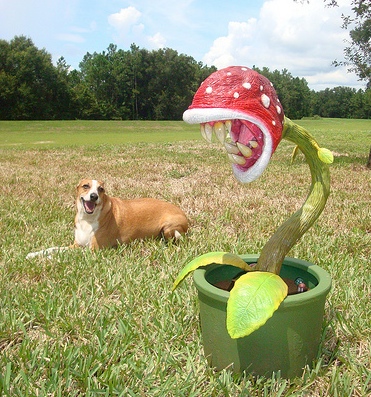
Although man-eating plants have been long debunked, carnivorous plants do exist. The most famous are the venus fly traps, but others include the pitcher plant and bromeliads. These plants eat insects in order to make up for nutrient deficiencies.

We would think that plants either eat insects or not. However, researchers believe this should be a sliding scale of carnivorous-ness. For example, petunias and potatoes have sticky hairs that catch insects, but do not digest them. They suggest that murderous plants are much more common and might digest the breakdown of their victims.

Wiley-Blackwell (2009, December 5). 'Killer petunias' should join the ranks of carnivorous plants, scientists propose. ScienceDaily. Retrieved December 6, 2009, from http://www.sciencedaily.com/releases/2009/12/091204103747.htm

Thursday, December 3, 2009

Feeding the Birds Feeds Their Evolution

http://www.loughallenbasin.com/birds.html


Humans undeniably make a huge impact on the world. We are shaping the Earth's climate, its habitats and ultimately their inhabitants.

But did you ever think something as simple as throwing some crumbs to our feathered friends are driving their evolution? Probably not. Some birds have become so dependent on humans for food that is has changed their migratory pattern and their wing shapes.

Over 3.5 years, scientists in Germany studied the migratory patterns of birds called blackcaps. The birds has split into two groups with significant different routes. One set of birds migrated from Central Europe to southwestern Spain, the other to northwestern UK.

The newer pattern to the UK is shorter than to Spain. As a result, these lazier birds have rounder wings that give better maneuverability, but makes them ill-equiped for flying long distances. Their bills are also more narrow than their Spanish-destined counterparts who eat large fruit.

Surprisingly, these birds are raised in the same forest side by side but do not interbreed. The split into two distinct populations occurred in less than 30 generations.

Wednesday, November 25, 2009

Break Out The Face Masks: Swine Flu Has Mutated

With all the hysteria concerning H1N1 aka swine flu, prepare for people to start barricading themselves in their houses:


Luckily, the strain found by China has an "isolated spread in the mainland" and is still susceptible to drugs and preventable by vaccine. Other information about the mutated strain--cases or deaths associated, where it was found, etc. has not been released.

The World Heath Organization (WHO) announced last week they were looking into a variant of the flu that may have caused two deaths and a severe case in Norway. This mutation isn't new--it has been found all over the world and in both mild and severe cases. However, Norway's Institute of Public Health announced this mutation may cause more severe disease by effectively infecting the deeper tissues in the airway.

The evolution and therefore mutation of viruses is not unusual. Viruses replicate incredibly fast and can infect many people easily. They must also be continuously evolving to stay ahead of the host cells. In particular RNA viruses have a high rate of mutation because they lack a way to correct any mutations. DNA replication has an enzyme that can go back, find and correct mutations that might have occured. To give you an sense of mutation rates, here are some stats according to Wikipedia (so take it with a grain of salt?):
-Eukaryotes (ex: humans, plants, animals) -.0010 to .00001 per base per generation
-Bacteria- .00000001 per base per generation
-DNA viruses (ex herpes virus, smallpox virus, human papillomavirus-HPV)- .000001 to .00000001 per base per generation
-RNA viruses (hepatitis, HIV, influenza, Norwalk virus)-.001 to .00001 per base per generation


Tuesday, November 24, 2009

Al Gore Stands Up For Climate Change

Al Gore, champion for climate change, decides to change the way he is promoting a greener future:


We should all start being a little green crazy.

Monday, November 23, 2009

O...M..G..-Comatose Man Was Actually Conscious For 23 years

Imagine being completely paralyzed in your body but fully conscious. You can hear everything going around you but you have no way to signal to the outside world that you are awake. This man did that (or rather nothing) for 23 years.


The man was involved in a 1983 car crash and diagnosed as being in a coma. Initial brain scans failed to pick-up his conscious brain activity. Both his family and caregivers attempted to communicate with him, but eventually gave up and assumed his vegetative state was permanent. Over the years, the doctors used the internationally used Glasgow Coma Scale to assess his condition. It tests eye, verbal and motor assessments to determine brain function, however, doctors still failed to miss signs his brain was fully functioning. Just three years ago, doctors used a "state of the art scanning system" that detected his consciousness.

Steven Laureys, a neurologist in Belgium says that of 44 diagnosed comatose patients he examined, 18 showed responses to communication. In about 40% of vegetative cases, closer examination shows a certain level of consciousness. He has also published a paper on the misdiagnoses of vegetative states.

This is not only TERRIFYING for the patient to be considered unresponsive by the outside world, but shines a new perspective on the decision for people who are considered comatose and are taken off life support. Eep.


Friday, November 20, 2009

It is coming people..

image source: http://www.nytimes.com/2008/06/03/science/03tier.html

For those of you who know me.. I am paranoid by a few things that are maybe slightly irrational. One: China controls the weather.. and may one day use it to control the world. Two: We make no sense if every reaction wants to achieve Entropy. Three, and most importantly for today, we are going to put ourselves in a matrix (UNLESS WE ARE ALREADY IN ONE!?). Okay.. point of today's entry is that Intel has announced that by 2020 chips in our brains will control computer.. not keyboards and computer mice (is that the plural of this kind of mouse?). The article is found here.

Basically, Researchers at Intel's research lab in Pittsburgh are attempting to decode brain waves and tagging them to meaning so someone could surf the Internet by the power of thought. The brain is too complicated for that you say? Well.. it does work the same way a computer does in many ways.. just a series of inputs and consequential outputs. The article details that when a person thinks about a bear or hears a bear growl.. similar brain waves and brain activity occurs. The chip would be surgically implanted and it would harness the power of your brain waves.

Sounds cool? But let us think about this for a minute. Pros.. education would be a Montessori school of wondrous exploration for the next generation. The concept that a child could explore every thought is intriguing and would produce a lot of very gifted people. Second, it would be absurd how much faster you could research something. For me.. I am a visual learner, and if I could just imagine what I was thinking of instead of verbalizing.. I would be in good business.
Cons.. this is a surgery plugging you into the Internet at all times. I like turning the computer off and reading.. if you had a surgery, I wonder if it would feel the same turning the computer off. Second, You think kids have no attention span? When there is so much information out there to explore and free TV online.. could you ever really focus on one thing? I am not sure I could. Third, there is equally as much bad information available to consume someone life online that is not productive.. deliciously trashy celebrity gossip.. crazy people's new religions.. etc. Would people ever come outside for the light of day.. the list goes on.

The article does bring up a good point that years ago if you said everyone would have a cell phone on them all the time, you would be looked at strangely and not conceive it as true. Cell phones are basically tiny computers with the iPhone's and g1's in the world. It is unavoidable to stop progress, and it may be inevitable to avoid embracing curiosity of a machine-human intelligence combination.. but I want to make mistakes and over sleep! I don't want to be a machine. Maybe I am alone. Here are some more articles for those interested. One, Two, and Three.

Wednesday, November 18, 2009

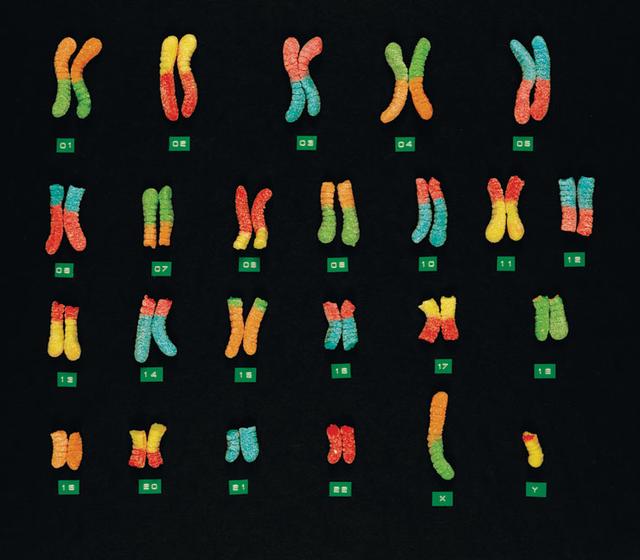
"Scientific concepts depicted with photos of everyday objects"


Taken directly from boingboing.net


Lee sez, "Kevin Van Aelst, who photographs household objects to explain basic life processes. He uses gummy worms for DNA, clothes for the heart and other things you'd find around the house."

While the depictions of information--such as an EKG, fingerprint, map or anatomical model--are unconventional, the truth and accuracy to the illustrations are just as valid as more traditional depictions. This work is about creating order where we expect to find randomness, and also hints that the minutiae all around us is capable of communicating much larger ideas.
Kevin Van Aelst (Thanks, Lee!)

Monday, November 16, 2009

Are You Hurting? Think of Someone You Love

In a recent study, women who held their boyfriend's hand while being subjected to "moderately painful heat stimuli" reported feeling less pain. The women were given the stimuli while holding their boyfriend's hand, a ball or a male stranger's hand.


In a second test, women were pained again, but while being shown a picture of a chair, a stranger or their boyfriend. Once again, those who were shown pictures of their boyfriends said they felt less pain.

As the article suggests:

The study was small, however, and more research would be needed to confirm the findings and figure out exactly what's going on. The results are detailed in the November 2009 issue of the journal Psychological Science.

Eisenberger and colleagues say the study suggests practical advice: If you're going through a stressful or painful experience, and you don't have a loved one handy, at least find a photo.


Jellyfish Don't Like Japan


Huge swarms of the Nomura jellyfish are threatening the livelihood of Japanese fisherman. These nasty suckers can grow up to 6ft in diameter and weigh up to 450 lbs and look like evil red-orange jello blobs. They easily get snagged in fishing nets and kill the little catch these fisherman are able to bring in.


This massive swarm is not local only to Japan, but is occurring thousands of miles off its coast. It has shut down desalination plants in the Middle East and Africa, killed off fishing industries and piss off beachgoers. This invasion used to be an every 40-yr occurance, but has slowly evolved into an annual event.

Why, you ask? Jellyfish steroids? Jelly take over? 2012 prophecy? Attack on Godzilla?

No..global warming. Warming of the oceans has allowed the jellyfish to spread and breed. Pollution also has increased the amount of plankton in the water, which provides even more food for these gelatinous bastards.

In Japan, these pests have cost the fishing industry upwards of ~$300 billion where upwards of 500 million of jellies have capsized boats from their weight in the nets and reduced daily catches by 30%.

Although scientists have shown a correlation between water temps and jellyfish population booms, there are other limiting factors such as food, currents and the temperature getting too high. One population decreased in the Bering Sea although there were record highs.


Sunday, November 15, 2009

"Humans Still Evolving as Our Brains Shrink "

There has been debate on whether or not humans are still evolving. The short answer, is yes we are, stupid.


Some changes are:
  • The human brain is shrinking. Using skull measurements, it shows that the brain has been getting smaller in the last 5,000 years--about 150 cubic cm, or "roughly 10%." This is true regardless of the population measured. Researchers theorize this is because of societal differences such as a movement away from the hunter-gatherer lifestyle and more specialization use of our brains. Basically, maybe we don't need all those extra brain space.
  • Humans have evolved some defenses against malaria. Malaria is caused by a parasite that is spread by mosquitoes, enters the bloodstream and infects red blood cells. One defense is sickle cell anemia, which deforms the cells and prevents parasitic infection. Interestingly, an Indian-Pakistani version has also evolved.
  • A lot of people are lactose intolerant, but lactose tolerance only evolved about 7,500 yrs ago in Europe so that we could take advantage of non-human milk. Also, some genes have shown to allow resistance to type II diabetes.
  • More analysis has shown that there has been many changes in our genome in the last 40,000 yrs. This may have be in response to our change in diet that used to be based on hunter-gatherers.

Wednesday, November 11, 2009

Ew, Antarctica is Dirty: Antarctic Lakes Full of Viruses

Alcami and his colleagues analyzed DNA from viruses found in water samples collected fromAntarctica's Lake Limnopolar, a surface lake on Livingston Island. They found nearly 10,000 species, including some small DNA viruses that had never before been identified. In total, the viruses were from 12 different families, some of which may be completely new to science, the researchers suggest.

The results reveal this Antarctic lake supports a virus community that's more diverse than most aquatic environments studied in the world so far — a surprising find considering that the polar region is generally thought to have low biological diversity due to the extreme environmental conditions. The scientists speculate the newly discovered viruses may have adapted specifically to thrive in such harsh conditions.

The team also found the community of viruses changed dramatically depending on the season. When the lake was ice-covered in the spring, the liquid water under the ice was inhabited by mostly small viruses, but in the summer months when the ice melted, the lake was home to mostly larger viruses.

"It looks like a completely different lake in summer," Alcami said. The scientists think the shift might be due to an increase in algae in the summertime, which the larger viruses infect.

The researchers hope to figure out whether any of the viruses are unique to Antarctica. If so, that would shed light on whether microbial life evolved independently in Antarctica, which has been isolated for millions of years, or they were introduced there more recently.

PLUTO SPEAKS OUT: I'm a planet, damn it!

From the culturelab blog on New Scientist:


Pluto

Greetings, planet Earth. It's Pluto. Remember me? Ever since your astronomers had their "big meeting" in 2006, I've heard Earth dwellers saying I'm not a planet anymore, and I'm fed up.

At least I'm getting some respect in journalist Alan Boyle's new book, The Case for Pluto - a lot more than from some other authors I won't mention (you know who you are, Neil deGrasse Tyson). It's a great account of my place in history and culture, the science of the solar system, and the rough ride I've been getting recently.

Best of all, he's sympathetic to my cause and gives me credit for my planety features: I'm big enough for my own gravity to make me round and I have an atmosphere.

Still, one positive portrayal can't make up for all the criticism I get from Earth. I may be on the small side, but is that any reason to pick on me? Compared to Jupiter, you're small too, Earth! You say I can't be in the planet club because I haven't cleared my orbit of other objects.

Ok, sure, Neptune does cross my path from time to time. But look at all the asteroids in Earth's neighbourhood. I heard one of them crashed into you just the other day, and I hope it hit you in the eye!

If you're looking for an object that doesn't fit in, take a look in the mirror, Earth. You're the only solar system body whose surface is covered in liquid water. And you have a huge concentration of oxygen in your atmosphere - way more than any other solar system body.

While we're at it, let's talk about longevity, a topic I'm glad to see Boyle raises in his book. When the sun goes red giant in a few billion years, guess who's going to get burned to a crisp? That would be you, Earth. Meanwhile, I'll still be out here, keeping it real.

Planetarily yours,

Pluto (as told to David Shiga)