BLOGGER TEMPLATES - TWITTER BACKGROUNDS �
Showing posts with label neuroscience. Show all posts

Monday, September 21, 2009

It's Official: Harry Potter Is Being Scientifically Studied

From NCBIROFL:

Harry Potter and the curse of headache.

The New England Center for Headache, Stamford, CT, USA.

"Headache disorders are common in children and adolescents. Even young male Wizards are disabled by them. In this article we review Harry Potter's headaches as described in the biographical series by JK Rowling. Moreover, we attempt to classify them. Regrettably we are not privy to the Wizard system of classifying headache disorders and are therefore limited to the Muggle method, the International Classification of Headache Disorders, 2nd edition (ICHD-II). Harry's headaches are recurrent. Although conforming to a basic stereotype, and constant in location, throughout the 6 years of his adolescence so far described they have shown a tendency to progression. Later descriptions include a range of accompanying symptoms. Despite some quite unusual features, they meet all but one of the ICHD-II criteria for migraine, so allowing the diagnosis of 1.6 Probable migraine."


Clearly there is nothing left to discover in science.
Saturday, September 5, 2009

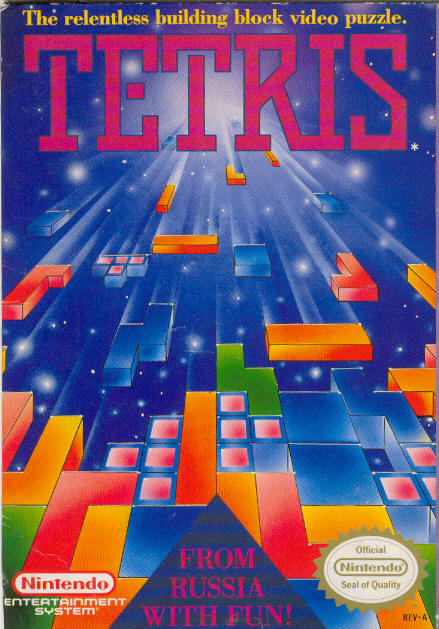
Tetris Increases Brain Matter


A new excuse to play videogames: BMC Research Notes finds that playing Tetris for 3months increases the brain's gray matter and efficiency.


Fifteen adolescent girls played Tetris for 3months, on average for 1.5hrs a week. (Girls were used since boys' tendency to have increased videogame experience might skew the results). MRI scans showed that their brain's gray matter, which is used for information processing, became thicker. These regions included the temporal and frontal lobe which is thought to be involved in information integration and planning complex movements.However, other parts of their brains had reduced activity compared to initial readings when monitored during gameplay. The control group who did not play the game at all showed no difference at all.

Scientist theorized this reduced activity may be because the brain is learning which regions are less important during Tetris. Another is that different parts are beginning to communicate with one another, to become more streamlined.